Why Color Shapes Trust: The Subconscious Signal Driving Every Buying Decision

The Hidden Psychology Behind Color, Emotion, and Decision‑Making!
Salespeople spend enormous energy refining messaging, tightening frameworks, and perfecting persuasion techniques. But long before a buyer evaluates your words, something far more primal is already shaping their decision.
Their eyes.
Sight is the fastest and most dominant sensory channel in the human body. And color which is the first visual signal the brain receives influences trust, emotion, and decision‑making in ways most sales professionals dramatically underestimate.
If you want to influence how buyers feel, decide, and commit, you must understand the sensory power of sight and the psychological force of color.
The Brain Decides Before You Think
Neuroscience is unequivocal: humans make trust judgments in milliseconds, long before logic enters the conversation.
A Princeton University study found that people form impressions of trustworthiness in 100 milliseconds before conscious reasoning even begins.
👉 First impressions: Making up your mind after a 100-ms exposure to a face – Princeton University
MIT researchers discovered that the brain can process visual information in as little as 13 milliseconds, making sight the fastest sensory processor we have.
👉 https://news.mit.edu/2014/in-the-blink-of-an-eye-0116
This means:
- Buyers feel before they think
- Color influences emotion before words influence meaning
- Visual cues shape trust before logic can intervene
- The nervous system reacts before the mind interprets
Your buyer’s first impression is formed before your pitch even begins.
Color is not aesthetic.
Color is neurological influence.
Why Sight Dominates the Buying Experience
Nearly half of the human brain is devoted to visual processing. That makes sight the most powerful sensory channel in shaping perception, emotion, and decision‑making.
Research shows that up to 90% of initial product judgments are based on color alone.
👉 https://colortheoryexplained.com/the-hidden-power-of-color-in-packaging-why-it-matters/
Another study found that color increases brand recognition by up to 80%.
👉 Color Increases Brand Recognition – What’s the Truth?
Why does this matter?
Because sight:
- Creates the first emotional impression
- Sets the tone for trust or skepticism
- Determines whether the buyer feels safe, overwhelmed, or intrigued
- Shapes the perceived professionalism of your brand
- Influences whether the buyer continues or disengages
Sight is the gateway sense.
Color is the gatekeeper.
The Psychology of Color in Decision Making
Color influences how buyers interpret:
- Safety
- Credibility
- Warmth
- Professionalism
- Urgency
- Luxury
- Simplicity
- Innovation
These interpretations happen automatically and without conscious awareness.
Color also improves memory by 5–10% compared to black and white, according to research published in the National Library of Medicine.
👉 https://pmc.ncbi.nlm.nih.gov/articles/PMC3743993/
This means color doesn’t just shape how buyers feel, it shapes what they remember.
Color is the emotional handshake before the conversation begins.
How Color Communicates Without Words
Color carries meaning biologically, culturally, and psychologically. Each layer influences how buyers interpret your presence.
Biological Influence
The human brain is wired to respond to color instantly.
Bright, harmonious colors activate the brain’s reward system, releasing dopamine which is the neurotransmitter associated with pleasure, motivation, and approach behavior.
👉 https://heraldacademy.org/why-bright-colors-trigger-our-brain-s-reward-system/
Conversely, dull or clashing colors can activate avoidance responses, triggering subtle discomfort or distrust.
This is why:
- High‑end brands use deep, rich tones
- Wellness brands use greens and neutrals
- Tech brands lean into blues for trust and stability
Your buyer’s biology is responding before their mind is interpreting.
Cultural Influence
Color meanings vary dramatically across cultures, and ignoring this can create unintentional friction.
Examples:
- Red
- Luck, prosperity, celebration (China)
- Danger, urgency, warnings (Western cultures)
- White
- Purity, simplicity (West)
- Mourning, loss (East Asia)
- Blue
- Trust, professionalism (West)
- Mourning (Iran)
These differences are documented across global cultural research.
👉 https://www.color-meanings.com/color-symbolism-different-cultures/
If you sell globally or even to diverse audiences, then color sensitivity becomes a competitive advantage.
Psychological Influence
Color shapes emotional interpretation and directly influences consumer behavior, motivation, and perception.
👉 (PDF) INFLUENCE OF COLOR PSYCHOLOGY ON CONSUMER BUYING
Common associations include:
- Red → urgency, passion, intensity
- Blue → trust, stability, expertise
- Green → balance, growth, renewal
- Yellow → creativity, optimism, attention
- Orange → warmth, enthusiasm, approachability
- Purple → luxury, depth, imagination
- Black → sophistication, authority
- White → clarity, simplicity
These associations form instantly.
The buyer doesn’t choose them, but their nervous system does.
Sight as a Core Sense in Sensory Selling
In Selling Senses, sight is one of the foundational sensory channels that shapes perception, trust, and emotional resonance.
Color is the most immediate expression of sight which is the first sensory input that reaches the buyer’s nervous system.
Sight influences:
1. Emotional State
Color can:
- Energize (reds, oranges)
- Calm (blues, greens)
- Reassure (neutrals, soft tones)
- Alert (high‑contrast combinations)
Your color choices can either regulate or dysregulate your buyer’s emotional state.
2. Cognitive Load
Color affects how easily the brain processes information.
- High contrast improves clarity
- Soft palettes reduce overwhelm
- Harmonious colors increase comprehension
- Poor color choices increase mental fatigue
If your visuals are hard to process, your message becomes harder to absorb.
3. Trust Formation
Visual coherence signals professionalism.
Visual chaos signals risk.
Buyers subconsciously ask:
- “Does this feel aligned?”
- “Is the intention honest?”
- “Can I trust this experience?”
Color is one of the fastest ways to answer those questions.
Why Color Matter Even More in Modern Sales
Today, nearly every sales interaction begins visually:
- LinkedIn profiles
- Websites
- Decks
- Virtual meetings
- Email signatures
- Social content
- Personal branding
- Product interfaces
Sight is the first sensory handshake.
Color is the emotional tone of that handshake.
In a world of digital noise, color becomes a shortcut becoming a fast, intuitive signal that tells the buyer:
“This feels aligned.”
or
“Something feels off.”
Color is now a competitive differentiator.
Color as a Tool for Sensory Alignment
When your colors match your message, your values, and your presence, buyers experience coherence which is a form of sensory alignment.
When they don’t, buyers feel friction.
Color can:
- Strengthen your positioning
- Reinforce your emotional tone
- Increase perceived credibility
- Support your narrative
- Make your message more memorable
- Reduce subconscious resistance
Color is not a branding decision.
It is a trust decision.
The Future of Sales Is Visual and Color Leads the Way
As automation accelerates, human perception becomes the differentiator.
Color is one of the simplest, most powerful ways to influence perception ethically and intentionally.
When used with awareness, color:
- Reduces resistance
- Enhances emotional resonance
- Supports clarity
- Builds trust
- Aligns intention with experience
Color is not just what buyers see.
It’s what they sense.
And in sensory selling, that makes it one of your most powerful tools.
Explore More Sensory-Driven Insights
If you want to dive deeper into the science and strategy behind sensory selling, explore more articles here:
👉 BLOG – Selling Senses
The Breakthrough Truth About Trust: Why Sensory Alignment Wins Sales
Why Alignment, Not Technique, Is What Buyers Actually Trust!
Sales has never struggled with information. However, it has often struggled with alignment.
Long before a buyer evaluates features, pricing, or proposals, something else is already happening. Subtle signals around presence, intention, and consistency are being picked up in real time. First impressions begin forming beneath the surface of the conversation.
In those early moments, quiet internal questions start to surface:
Do I trust this person
Do they understand me
Does this feel right
Importantly, those answers form before logic fully enters the room.
Research in behavioral science shows that emotion and intuition play a central role in decision making. Dual process models explain that intuitive and experiential systems guide early judgments, while analytical reasoning often follows afterward to justify the choice.
👉 https://en.wikipedia.org/wiki/Cognitive-experiential_self-theory
That is why human connection is built on sensory alignment.
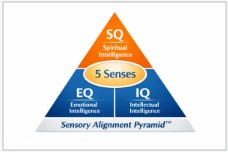
In Selling Senses, I introduce the Sensory Alignment Pyramid because real influence does not come from saying the right words alone. Instead, it comes from harmony between what we say, what we feel, and what we stand for.
When those elements align, trust forms naturally. When they do not, buyers hesitate, even if they cannot explain why.
The Sensory Alignment Pyramid Reveals How Trust Forms
The Sensory Alignment Pyramid explains how trust and decision making are built from the inside out.
At its core, alignment depends on three forms of intelligence working together rather than pulling in different directions. When one is missing, conversations feel strained. Buyers pull back. Momentum fades.
Many traditional sales models emphasize technique and information. However, buyers are responding to something deeper and more human.
The Foundation: Intellectual and Emotional Intelligence
Every strong relationship begins with stability. In sales, that stability comes from intellectual and emotional intelligence.
Intellectual intelligence, or IQ, represents knowledge and competence. It ensures we understand our product, our market, and the problems we are solving. Without IQ, credibility disappears quickly. Buyers may listen politely, yet confidence never fully forms.
Emotional intelligence, or EQ, creates connection. It allows us to sense what is happening beneath the surface. It helps us listen beyond words, notice tone and pacing, and recognize hesitation or concern.
Research from Harvard professional education shows that emotional intelligence is a strong predictor of professional effectiveness, especially in roles that depend on influence and relationship building.
👉 https://professional.dce.harvard.edu/blog/emotional-intelligence-is-no-soft-skill/
In addition, decision science research shows that when emotional processing is impaired, people struggle to make even simple choices despite intact logical reasoning. Emotion is not a distraction from decisions. It is part of how decisions happen.
👉 https://ahead-app.com/blog/eq-at-work/the-science-of-decision-making-and-emotional-intelligence-in-business
Together, IQ and EQ create a strong base. Even so, they are not enough by themselves.
The Apex: Spiritual Intelligence
At the top of the pyramid sits spiritual intelligence, or SQ.
SQ acts as a compass. It grounds decisions in values, purpose, integrity, and intuition. While IQ explains what we know and EQ shapes how we connect, SQ guides why we show up at all.
Without spiritual intelligence, deals can still close and targets can still be met. Yet trust often weakens over time because buyers sense misalignment between message and motive.
Research exploring spiritual intelligence describes it as a meaning centered form of awareness that helps people interpret complex situations and align actions with values and purpose.
👉 https://pmc.ncbi.nlm.nih.gov/articles/PMC7870593/
Additional academic work presents spiritual intelligence as a distinct human capacity that integrates thought, emotion, and values into coherent and humane action.
👉 https://www.mdpi.com/2673-8392/5/3/107
In practice, SQ sharpens discernment. It strengthens intuition. It supports better judgment when signals are subtle. Buyers often feel this immediately. Conversations feel grounded rather than calculated.
Why Most Sales Frameworks Miss This
Most sales systems focus heavily on knowledge and process. Some include empathy and emotional awareness. Very few address purpose, intention, or inner alignment.
As a result, a gap appears.
Intellectual intelligence builds credibility.
Emotional intelligence creates empathy.
Spiritual intelligence anchors integrity.
When integrity is missing, buyers sense it quickly. Research on the affect heuristic shows that people rely on fast emotional signals to guide judgments of risk and trust before detailed analysis takes place.
👉 https://en.wikipedia.org/wiki/Affect_heuristic
This explains why a message can sound correct yet feel wrong. The sensory signal overrides the logical structure.
How the Senses Shape Buyer Trust
Trust is not built by content alone. It is built through sensory experience.
Tone, pacing, and pauses are quickly noticed.
Pressure or calm is sensed almost immediately.
Authentic presence versus rehearsal is felt right away.
Business research on customer loyalty consistently shows that emotional connection drives long term commitment more strongly than rational satisfaction alone.
👉 https://www.intelemark.com/blog/b2b-sales-conversations/
Therefore, the senses act as translators. They convert intention into something the buyer can feel and evaluate instantly.
When IQ, EQ, and SQ align, the senses confirm safety and trust. When they do not, even the best script cannot repair the disconnect.
Selling Has Become More Human
As automation and artificial intelligence continue to expand, human sensing becomes the real advantage.
Buyers quickly detect over scripted delivery and performance behavior. Instead, they respond to awareness, authenticity, and alignment in real time.
Selling today is not about pushing more information. Rather, it is about creating resonance. It is about aligning knowledge, empathy, and purpose so conversations feel natural and credible.
That is where trust forms.
Decisions take shape in those moments.
Selling Senses begins right there.
Recommended Reading
To explore more about the shift toward human centered selling and perception driven trust building, continue here:
👉 https://www.sellingsenses.com/why-selling-has-become-more-human-than-ever/
Sales Secrets No One Taught You: How Inner Wisdom Beats Logic
The sixth sense that separates top sellers from the rest!
Sales has never suffered from a lack of information.
However, what it has always lacked is attunement, the ability to sense, adapt and respond to human signals that shape real decision making.
Scripts, frameworks and playbooks exist to create consistency. For example, they standardize processes, reduce risk and make training easier. Yet, consistency does not create trust. Instead, presence creates trust.
The best sellers do not sound perfect.
Instead, they sound aware.
Sellers read the room. Meanwhile, noticeable hesitation does not escape them. Moreover, they understand when to lean in and when to pause.
That is the sixth sense in sales.
Why Scripts Fail in Real Conversations
Scripts assume conversations are simple and predictable. In reality, people are not.
No script can account for:
- A prospect’s changing emotional state
- Subtle changes in tone or energy
- Moments when curiosity turns into hesitation
- The difference between being interested and being uncertain
Imagine two sellers presenting the same solution to the same buyer. While one follows a script exactly, the other adjusts based on the buyer’s energy, noticing hesitation or excitement. As a result, even though the information is identical, the outcomes are completely different. Buyers do not just evaluate facts. Instead, they evaluate feeling.
When sellers cling to scripts, they respond to words instead of signals. Consequently, buyers notice this immediately.
Scripts are useful for guidance, but they cannot replace the adaptability and sensitivity needed to read a real conversation.
Inner Wisdom Is Not Guesswork
Intuition is often misunderstood as instinct or a vague gut feeling. In fact, it is trained perception, a skill developed through experience, reflection and real interaction.
Harvard Business School professor Laura Huang explains that intuition comes from experience, pattern recognition and awareness of subtle cues. Importantly, it is especially useful in complex or uncertain situations where data alone does not tell the whole story. Top sellers use logic and sensory input like timing, confidence, tone and context together. In other words, they do not abandon facts. They use intuition to know when and how to apply them.
In sales, this means noticing:
- A prospect’s yes that feels hesitant signals caution.
- Engagement can drop without any clear reason.
- A polite agreement may mask underlying doubt.
Huang’s ideas are explored in this HBR podcast:
https://hbr.org/podcast/2025/07/what-we-know-about-leading-with-intuition
Sellers who cultivate inner wisdom learn to hear between the lines. As a result, they stop performing a script and start having a conversation that feels real and aligned.
Data and Intuition: The Best Decisions Come from Both
Intuition alone is powerful, but relying on it without information can miss important facts.
Marcy Farrell explains that good decisions come from combining evidence and intuition. Specifically, evidence helps quantify and validate situations, while intuition interprets gaps that numbers cannot explain, such as context and human nuance. Leaders who use both make faster, more confident and more effective decisions.
In sales, this matters every day. For example, data might show which opportunities have higher potential, but without intuition, a seller may miss signs that a deal is at risk because of timing or emotional readiness. Therefore, using both data and intuition gives a complete picture.
See more here:
https://www.harvardbusiness.org/insight/data-and-intuition-good-decisions-need-both/
This combination mirrors how top sellers operate. In practice, they use information to guide the conversation and intuition to sense readiness, trust and engagement in real time.
Spiritual Intelligence Deepens Awareness
Research has explored whether spiritual intelligence exists and how it functions in human decision making. The article Does Spiritual Intelligence (SI) Exist? A Theoretical Investigation of a Tool Useful for Finding the Meaning of Life examines how spiritual intelligence helps people seek meaning, reflect deeply, and navigate complex situations beyond logic or emotion. (pmc.ncbi.nlm.nih.gov)
Another study, Spiritual Intelligence: A New Form of Intelligence for a Sustainable and Humane Future by Gianfranco Cicotto, presents spiritual intelligence as a distinct form of human intelligence that integrates thoughts, emotions, values and action through a framework of meaning. In particular, it highlights that spiritual intelligence helps people interpret ambiguity, respond to complex situations, align actions with purpose and recognize others’ values in building meaningful human connections. (mdpi.com)
For sellers, this means noticing subtle cues about what matters to buyers, understanding deeper motivations, and building trust at a meaningful level. Growing spiritual intelligence through faith, reflection or practice strengthens intuition. As a result, it allows sellers to sense hesitation, comfort or alignment that logic alone cannot reveal. Conversations become more authentic, more connected, and more aligned with purpose. Selling becomes less about persuasion and more about perception, connection, and meaning.
Timing Is More Important than Technique
A well crafted question asked too early creates pressure. Conversely, the same question asked at the right moment creates clarity.
Great sellers notice:
- Genuine curiosity stands out immediately.
- Meanwhile, subtle cracks in confidence catch their attention.
- Similarly, silence often speaks louder than another question.
They do not rush to fill space. Instead, they let the conversation breathe.
A script might tell you what to say. However, inner wisdom tells you when.
For example, asking a buyer about budget before they have fully shared concerns can feel pushy. A perceptive seller waits, noticing pauses and hesitation, and instead guides the conversation so the buyer opens up naturally. Therefore, the result is a discussion that feels aligned and authentic.
Sensing the flow and adjusting pace is often what separates effective sellers from average ones.
What Buyers Are Responding To
Buyers are not evaluating your script. Instead, they are evaluating how safe and understood they feel with you.
They subconsciously ask:
- Do you understand me?
- Are you listening or just waiting to talk?
- Are you confident without being pushy?
As a result, these questions are answered long before a proposal is opened. Deals are often decided early, before logic enters the room.
Even in business to business sales where decisions are based on many factors, emotional cues drive confidence and engagement. Buyers want certainty, reassurance and alignment — things a script cannot provide.
How to Develop the Sixth Sense Through Awareness and Faith
Developing the sixth sense is not about abandoning structure. Instead, it is about expanding awareness and strengthening spiritual insight.
You build inner wisdom by:
- Listening for emotion, not just words
- Observing pacing, pauses and posture
- Letting go of the need to control the conversation
- Trusting presence over performance
- Growing in faith to strengthen spiritual intuition
As a result, as you grow in spiritual awareness and faith, your ability to sense hesitation, comfort or alignment deepens. Conversations become richer, more authentic and more aligned with purpose. Selling becomes less about persuasion and more about perception and connection guided by meaning.
Selling Is Becoming More Human, Not Less
As automation and standardization increase, human sensing becomes the advantage.
Buyers can instantly detect over automation, over scripting and rehearsed conversations. Instead, what they respond to is real time awareness, authenticity and connection.
The future of sales belongs to those who can feel the moment and act accordingly.
Go Deeper
This idea is part of a broader shift in how selling works today. Explore more here:
https://www.sellingsenses.com/why-selling-has-become-more-human-than-ever/
Scripts can guide conversations. However, inner wisdom, faith and awareness together guide decisions.
What signals are you noticing in your sales conversations that no script or spreadsheet could ever capture?
Why Selling Is Less Logical & More Sensory-Powered

Most decisions happen well before logic enters the picture, shaped by the subtle signals we feel, notice, or sometimes overlook!
Logic Isn’t Driving Decisions—Emotion Is
Most sales training still assumes buyers make decisions based on logic.
Explain the value. Show the ROI. Overcome the objections.
Sound familiar? Yet that’s not how buying actually works.
According to Harvard professor Gerald Zaltman, up to 95 percent of decisions happen in the subconscious mind. In other words, people don’t decide with logic first. They decide with feeling, instinct, and perception — and only afterward do they use logic to justify the choice.
👉 The Subconscious Mind of the Consumer and How to Reach It
Furthermore, neuroscientist Antonio Damasio found that people who lose the ability to feel emotion become unable to make decisions at all, even when their logical reasoning remains intact. Without emotion, choice disappears.
So, while selling has always worked this way, we simply haven’t paid close attention to it.
Buyers Aren’t Uninformed—They’re Overwhelmed
Today’s buyers are overwhelmed, not uninformed. They’ve seen the options. They’ve heard the claims. Consequently, more information doesn’t create confidence. It creates friction and confusion.
What buyers are really looking for is certainty and clarity. And certainty isn’t only logical. It’s something you feel. Something you sense. And something you experience.
Think about the last time a buyer said, “I just don’t feel ready.”
Nothing in the proposal changed. The numbers didn’t change.
But something in the energy did.
Trust Forms Before Logic Arrives
Studies on trust show that people form impressions of credibility within milliseconds, long before facts are evaluated. Tone. Presence. Calm. Intent. These signals land first. Logic arrives later.
This is why two identical offers can produce completely different outcomes.
One feels right. The other feels risky. One feels aligned. The other feels asserted.
Most sales aren’t lost because the solution was wrong.
They’re lost because something didn’t feel right.
The Sixth Sense of Modern Selling
That’s why the best salespeople sense this in real time. They notice subtle shifts in energy — shorter responses, hesitation, comfort turning into resistance. Rather than pushing past these signals, they adapt to them.
This is the missing layer in today’s sales: the sixth sense. Not mysticism, but perception.
The ability to read the moment instead of following a sales script.
Sensory selling is the practice of tuning into the emotional, energetic, and intuitive signals that shape decisions long before logic enters the room.
Selling Has Become More Human
Selling hasn’t become harder. It has become more human.
The top salespeople who win aren’t the loudest or the most persuasive. They’re the most perceptive. They know when to speak, when to listen, and when to let the buyer arrive at the decision themselves.
If selling feels harder than it used to, it’s probably because you’re still trying to convince instead of connect.
And connection is never solely logical. It’s sensory!
👉 Learn more about Sensory Selling: EXCERPT – Selling Senses
What are you sensing in your conversations that you’ve been ignoring?
Welcome to my Blog!
Welcome. My name is Armen Avanessian, author of Selling Senses. I’m so happy to have you as a visitor to my blog about my new book. This project is very special to me, and I hope to share some of that excitement with you here.
I’ll be using this blog to interact with you about Selling Senses, expanding on some of the topics in it and blogging on some of the ideas related to my book. This is a great place for you to get to know me, and I’m looking forward to getting to know you, too. What did you think of Selling Senses? What questions do you have for me? How do you relate to my book?
I’ll be returning here frequently with new posts and responses to feedback from you. Until next time, tell me a little bit about yourself.
