The Breakthrough Truth About Trust: Why Sensory Alignment Wins Sales
Why Alignment, Not Technique, Is What Buyers Actually Trust!
Sales has never struggled with information. However, it has often struggled with alignment.
Long before a buyer evaluates features, pricing, or proposals, something else is already happening. Subtle signals around presence, intention, and consistency are being picked up in real time. First impressions begin forming beneath the surface of the conversation.
In those early moments, quiet internal questions start to surface:
Do I trust this person
Do they understand me
Does this feel right
Importantly, those answers form before logic fully enters the room.
Research in behavioral science shows that emotion and intuition play a central role in decision making. Dual process models explain that intuitive and experiential systems guide early judgments, while analytical reasoning often follows afterward to justify the choice.
👉 https://en.wikipedia.org/wiki/Cognitive-experiential_self-theory
That is why human connection is built on sensory alignment.
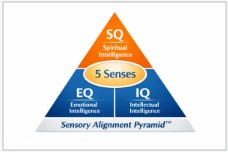
In Selling Senses, I introduce the Sensory Alignment Pyramid because real influence does not come from saying the right words alone. Instead, it comes from harmony between what we say, what we feel, and what we stand for.
When those elements align, trust forms naturally. When they do not, buyers hesitate, even if they cannot explain why.
The Sensory Alignment Pyramid Reveals How Trust Forms
The Sensory Alignment Pyramid explains how trust and decision making are built from the inside out.
At its core, alignment depends on three forms of intelligence working together rather than pulling in different directions. When one is missing, conversations feel strained. Buyers pull back. Momentum fades.
Many traditional sales models emphasize technique and information. However, buyers are responding to something deeper and more human.
The Foundation: Intellectual and Emotional Intelligence
Every strong relationship begins with stability. In sales, that stability comes from intellectual and emotional intelligence.
Intellectual intelligence, or IQ, represents knowledge and competence. It ensures we understand our product, our market, and the problems we are solving. Without IQ, credibility disappears quickly. Buyers may listen politely, yet confidence never fully forms.
Emotional intelligence, or EQ, creates connection. It allows us to sense what is happening beneath the surface. It helps us listen beyond words, notice tone and pacing, and recognize hesitation or concern.
Research from Harvard professional education shows that emotional intelligence is a strong predictor of professional effectiveness, especially in roles that depend on influence and relationship building.
👉 https://professional.dce.harvard.edu/blog/emotional-intelligence-is-no-soft-skill/
In addition, decision science research shows that when emotional processing is impaired, people struggle to make even simple choices despite intact logical reasoning. Emotion is not a distraction from decisions. It is part of how decisions happen.
👉 https://ahead-app.com/blog/eq-at-work/the-science-of-decision-making-and-emotional-intelligence-in-business
Together, IQ and EQ create a strong base. Even so, they are not enough by themselves.
The Apex: Spiritual Intelligence
At the top of the pyramid sits spiritual intelligence, or SQ.
SQ acts as a compass. It grounds decisions in values, purpose, integrity, and intuition. While IQ explains what we know and EQ shapes how we connect, SQ guides why we show up at all.
Without spiritual intelligence, deals can still close and targets can still be met. Yet trust often weakens over time because buyers sense misalignment between message and motive.
Research exploring spiritual intelligence describes it as a meaning centered form of awareness that helps people interpret complex situations and align actions with values and purpose.
👉 https://pmc.ncbi.nlm.nih.gov/articles/PMC7870593/
Additional academic work presents spiritual intelligence as a distinct human capacity that integrates thought, emotion, and values into coherent and humane action.
👉 https://www.mdpi.com/2673-8392/5/3/107
In practice, SQ sharpens discernment. It strengthens intuition. It supports better judgment when signals are subtle. Buyers often feel this immediately. Conversations feel grounded rather than calculated.
Why Most Sales Frameworks Miss This
Most sales systems focus heavily on knowledge and process. Some include empathy and emotional awareness. Very few address purpose, intention, or inner alignment.
As a result, a gap appears.
Intellectual intelligence builds credibility.
Emotional intelligence creates empathy.
Spiritual intelligence anchors integrity.
When integrity is missing, buyers sense it quickly. Research on the affect heuristic shows that people rely on fast emotional signals to guide judgments of risk and trust before detailed analysis takes place.
👉 https://en.wikipedia.org/wiki/Affect_heuristic
This explains why a message can sound correct yet feel wrong. The sensory signal overrides the logical structure.
How the Senses Shape Buyer Trust
Trust is not built by content alone. It is built through sensory experience.
Tone, pacing, and pauses are quickly noticed.
Pressure or calm is sensed almost immediately.
Authentic presence versus rehearsal is felt right away.
Business research on customer loyalty consistently shows that emotional connection drives long term commitment more strongly than rational satisfaction alone.
👉 https://www.intelemark.com/blog/b2b-sales-conversations/
Therefore, the senses act as translators. They convert intention into something the buyer can feel and evaluate instantly.
When IQ, EQ, and SQ align, the senses confirm safety and trust. When they do not, even the best script cannot repair the disconnect.
Selling Has Become More Human
As automation and artificial intelligence continue to expand, human sensing becomes the real advantage.
Buyers quickly detect over scripted delivery and performance behavior. Instead, they respond to awareness, authenticity, and alignment in real time.
Selling today is not about pushing more information. Rather, it is about creating resonance. It is about aligning knowledge, empathy, and purpose so conversations feel natural and credible.
That is where trust forms.
Decisions take shape in those moments.
Selling Senses begins right there.
Recommended Reading
To explore more about the shift toward human centered selling and perception driven trust building, continue here:
👉 https://www.sellingsenses.com/why-selling-has-become-more-human-than-ever/
